
What Is an Injection Molding Machine? | Full Guide for 2025
An injection molding machine is essential for producing plastic parts with high precision and efficiency. Learn how it works, its components, types, advantages, and common applications.
What Is an Injection Molding Machine?
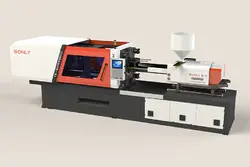
An injection molding machine is a manufacturing device used to produce plastic products by melting polymer material and injecting it into a mold cavity. Once cooled, the material solidifies into the shape of the mold, allowing mass production with high accuracy and consistent quality.
Injection molding machines are widely used in industries such as automotive, medical, packaging, electronics, and household goods.
How Does an Injection Molding Machine Work?
The machine operates through a controlled cycle of heating, injecting, cooling, and ejecting. Below are the main stages:
1. Material Feeding and Melting
Plastic pellets are fed through a hopper into a heated barrel. Inside the barrel, heaters and a rotating screw melt the plastic into a viscous, moldable form.
2. Injection
The screw pushes the molten plastic through the nozzle into the mold at high pressure, ensuring the material fills all mold cavities precisely.
3. Cooling
The mold is cooled using water channels. As the plastic cools, it solidifies and forms the final product shape.
4. Ejection
Once the part has cooled, the mold opens and ejector pins push the finished product out. The cycle then repeats.
Main Components of an Injection Molding Machine
Injection molding machines consist of two primary units:
1. Injection Unit
Hopper
Barrel
Heaters
Screw
Nozzle
This unit melts and injects the plastic material.
2. Clamping Unit
Mold plates
Clamping mechanism
Ejector system
This unit holds the mold closed during injection and opens it for part removal.
Types of Injection Molding Machines
1. Hydraulic Injection Molding Machines
Powerful and robust
Suitable for large and heavy products
Cost-effective and widely used
2. Electric Injection Molding Machines
High precision and energy-efficient
Ideal for medical, electronics, and clean-room applications
Fast cycle times
3. Hybrid Injection Molding Machines
Combine hydraulic strength with electric efficiency
Reduced energy consumption
Better performance and control
Advantages of Injection Molding Machines
Mass production capability
High precision and consistent product quality
Low waste generation
Fast production cycle
Ability to produce complex shapes
Supports various polymers and materials
Common Uses and Applications
Injection molding machines are essential in manufacturing:
Automotive components
Medical devices and lab equipment
Plastic packaging and containers
Home appliances parts
Toys and consumer products
Electrical and electronic housings
Why Injection Molding Is Important
Injection molding remains the most reliable and scalable method for plastic manufacturing. It delivers speed, precision, repeatability, and cost efficiency — making it the backbone of global plastic production.
Conclusion
An injection molding machine is a powerful industrial tool that transforms raw plastic pellets into high-quality, consistent products. Understanding how these machines work helps manufacturers optimize production, reduce costs, and ensure superior product quality.