
What Is an Injection Molding Machine? Your Complete Guide
What Is an Injection Molding Machine? Your Complete Guide
An injection molding machine is one of the most essential industrial machines used in the manufacturing of plastic products. It is responsible for producing millions of items we use daily — from household tools to automotive parts and medical components. The machine works by transforming raw plastic material into a finished, high-quality product with precision and efficiency.
1. Definition of an Injection Molding Machine
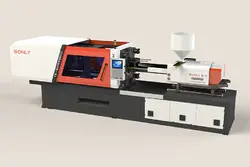
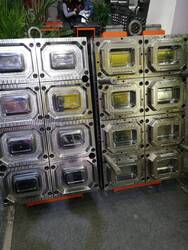
An Injection Molding Machine is an industrial device that melts plastic material and injects it into a shaped mold. Once the material cools, it solidifies and takes the exact form of the mold, allowing mass production of identical plastic parts at a relatively low cost.
2. How Does an Injection Molding Machine Work?
The injection molding process goes through several essential stages to produce a perfect final part:
1. Raw Material Feeding
Plastic pellets are added into the hopper, which is the entry point of the materials.
2. Melting Phase
The pellets move into a heated barrel that contains a rotating screw. The heat and the screw’s movement melt the plastic until it becomes fully molten.
3. Injection into the Mold
The molten plastic is pushed through the nozzle into the mold under high pressure to ensure complete filling of the mold cavity.
4. Cooling
The mold remains closed as the material cools and transforms from a liquid state to a solid form.
5. Ejection
Once the part has cooled completely, the mold opens automatically and the finished product is ejected using mechanical ejector pins.
3. Main Components of an Injection Molding Machine
The machine consists of two major units, each performing a critical role:
A. Injection Unit
Hopper
Heater bands
Barrel
Screw
Nozzle
This unit melts the plastic and injects it into the mold.
B. Clamping Unit
Mold base
Opening and closing system
Hydraulic or electric mechanism
Ejector system
4. Types of Injection Molding Machines
1. Hydraulic Injection Molding Machines
Most common
High pressure and strong performance
Ideal for large products
2. Electric Injection Molding Machines
Faster cycle times
Energy-efficient
High precision and cleaner operation
3. Hybrid Machines
Combine hydraulic strength with electric accuracy
Better stability and energy savings
5. Advantages of Injection Molding Machines
High production speed
Ability to create complex shapes
High dimensional accuracy
Low material waste
Cost-effective for mass production
Suitable for a wide range of industries
6. Industries That Use Injection Molding Machines
Automotive manufacturing
Medical devices
Packaging and containers
Household products
Toys and consumer goods
Electronics and electrical parts
Precision industrial components
7. Why Are Injection Molding Machines Important?
Injection molding machines are the backbone of the modern plastics industry. They combine speed, accuracy, and consistency, making them essential for producing affordable products on a global scale.
Conclusion
An injection molding machine is a powerful technology that converts raw plastic pellets into high-quality, consistent products. Understanding how it works and its key components helps manufacturers enhance productivity, reduce costs, and improve product quality